It’s a worry many parents share: “My child just isn’t interested in reading yet.”
Maybe they wiggle away during storytime, lose focus before you reach the second page, or choose playtime or screen time over books every time. Maybe they enjoy being read to, but don’t want to interact with the story. Or maybe they have never shown much interest in books at all.
Here’s the reassuring news: this is completely normal.
Many preschoolers are naturally active, easily distracted, or simply more drawn to movement and play. None of that means they won’t become successful readers later. Children develop literacy skills at different paces, and not being interested yet is not the same as not being capable.
This article will help you understand why a child might avoid books and offer research-backed ways to spark interest without pressure or frustration.

🌱 Reading Interest Grows From Positive Experiences
A child’s desire to read doesn’t start with knowing letters or sounding out words. It starts with positive emotional connections — warmth, closeness, fun, curiosity, and shared attention. Reading is a social experience long before it’s a solo activity.
If your child isn’t drawn to books right now, it may simply mean:
- They’re not developmentally ready
- They prefer movement-based play (very common!)
- They haven’t yet found books that capture their interest
- They associate reading with pressure or boredom
- Their attention span is still growing
- They learn best through touch, sound, or physical exploration
All of these are normal, and all of them can shift with time. You can spark interest without forcing anything. After all, educators commonly look to children aged 5 to 10 to learn to read through phonics, sight words, letter recognition… and then on to chapter books and complex topics. But there is a huge difference in a child’s development between age 3 and age 5 and beyond. Don’t expect your 3-year-old to act or behave like a 5-year-old.
💛 1. Start With Connection, Not Correction
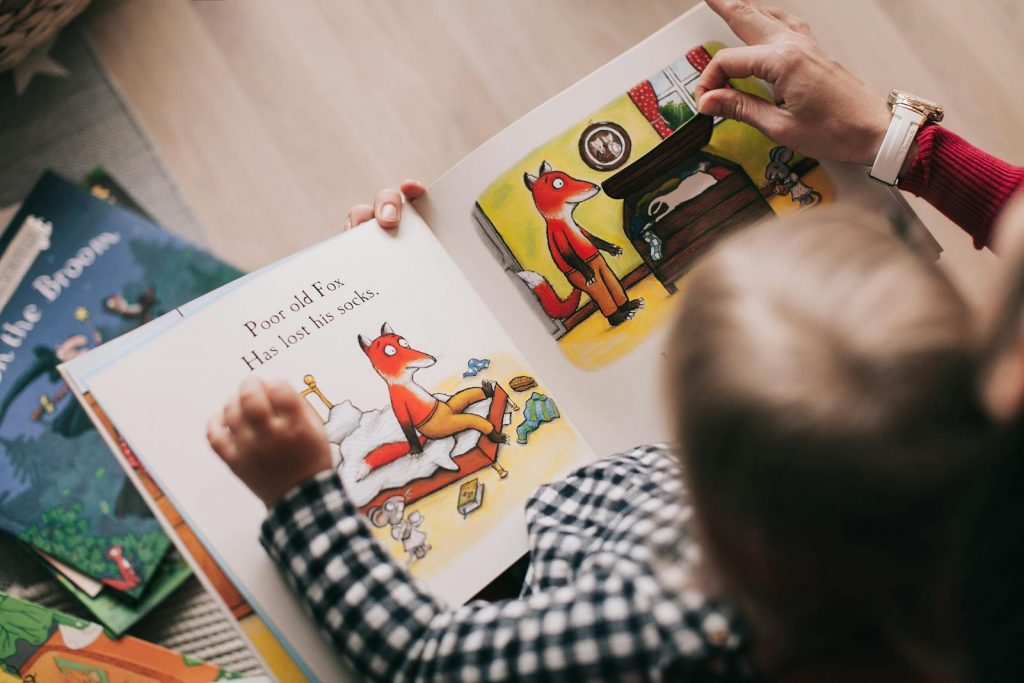
The best way to build interest in reading is to make it feel like a warm, connecting moment, and not a learning session. If kids associate books with coziness, laughter, and your undivided attention, they’re far more likely to come back for more.
Try:
- Snuggling on the couch with a blanket
- Turning reading into “special time with Mom/Dad”
- Keeping it short: a few pages, not the whole book
- Letting your child hold the book or turn the pages
Tiny, positive moments build lifelong habits.
📚 2. Follow Their Interests — Not Bookstore Trends
A child who isn’t interested in typical picture books may love:
- Books about trucks, tools, or machines
- Nonfiction books with real photos
- Interactive books (lift-the-flap, textures, tabs)
- Wordless picture books
- Books based on familiar characters they like
- Silly books with humor
- Very simple board books
For example, if your child loves Acorn-Putters videos, a Hazel & Scamp storybook might hold their attention better than a random library pick. Plenty of children go for books about their favorite characters or movies at the library or book store, so encourage them to read with these things they already love.
The key is to match books to your child, not to what you think children “should” like.
🎯 3. Keep Storytime Short

Many parents assume storytime must last 10–20 minutes. But early reading experiences can be:
- 2 minutes
- 4 pages
- Just the pictures
- One funny moment
Short, positive experiences build interest; long, forced ones can turn kids away.
Follow your child’s lead:
- If they want to stop, stop. Forcing it will lead to negative thoughts.
- If they flip ahead, let them.
- If they want to talk about the art, follow that curiosity.
You’re not losing learning, you’re gaining engagement.
🎨 4. Let Them “Read” in Their Own Way
Children explore books in ways adults don’t expect:
- Flipping pages quickly
- Pointing at characters
- Retelling the story however they want
- Skipping pages
- Focusing on just one picture
- Holding the book upside down
This is not “wrong.” This is early literacy behavior.
Letting them play with books builds independence, confidence, and curiosity — the building blocks for real reading later.
🧺 5. Make Books a Natural Part of the Home
Sometimes kids aren’t interested in reading because books feel like “schoolwork” instead of part of everyday life.
Try placing books:
- In baskets around the house
- Next to the bed
- In the car
- In the playroom
- Near toys
- On a small shelf at child-height
Kids are more likely to pick up a book when it’s already within reach.
Rotate books every few weeks to keep things fresh.
🎵 6. Use Songs, Rhymes, and Play
Reading readiness begins long before letters. Kids who don’t sit still for books often love:
- Nursery rhymes
- Songs with motions
- Rhyming games
- Storytelling with puppets
- Acting out books with toys
These activities build phonological awareness, which is one of the strongest predictors of future reading success without feeling like reading at all.
Movement + rhythm = literacy building.
🐿️ 7. Try Wordless or Low-Text Books
Many kids who “don’t like reading” actually struggle with the structure of stories and benefit from wordless picture books.
With these books, your child can:
- Look at pictures
- Tell the story in their own words
- Follow visual patterns
- Explore emotions and expressions
This supports comprehension skills which are a core part of reading, and it does it without any pressure on attention span or verbal ability.
🌟 8. Make Reading Active, Not Passive
For energetic kids, sitting still and listening can feel impossible. Instead of fighting that, lean into it.
Try active reading:
- Ask them to find things in the picture
- Invite them to act out what’s happening
- Let them hold a toy that matches the story
- Use funny voices and sound effects
- Let them move around while listening
Movement helps attention, not the opposite.
🧠 9. Remove Pressure Completely
If a child feels reading is something they “should” do, they may pull away. Preschoolers thrive on choice, independence, and exploration.
Remove pressure by:
- Avoiding phrases like “You have to listen”
- Never forcing a full book
- Letting them choose whether to participate
- Celebrating small successes (“You noticed the squirrel!”)
- Keeping expectations age-appropriate (3 to 5-year-olds have short attention spans!)
The more relaxed you are, the more open your child will be.
❤️ Final Thoughts: Interest Comes With Time
A lack of reading interest at ages 3–5 is not a red flag, instead it’s a developmental stage. Appetite for reading grows slowly through joyful, low-pressure experiences.
Your role is not to push. Your role is to invite.
Children who grow up in homes filled with conversation, stories, songs, and loving interaction become confident readers, even if they weren’t interested early on.
One day, often when you least expect it, your child will pick up a book and want to explore it. And when that day comes, they’ll be ready because you helped build a positive foundation.
You are not behind.
Your child is not behind.
You’re on the journey together. 💛

Energetic, fun, curious, and loving – Hazel Acorn-Putter can’t wait to share her adventures with you.